The Spanish artist Pablo Pérez-Mínguez (Madrid, 1946-2012), also known as P.P.M., is one of the most outstanding precursors of Spain’s modern photography.
With initiatives such as the transgressive magazine Nueva Lente (New Lens), published during the last years of Franco’s dictatorship, Pablo Pérez-Mínguez created and helped develop a new manner of understanding photography as a tool of expression and convergence. Nueva Lente became not only a reference publication, but also the launching pad for the best photographers in Spain today.
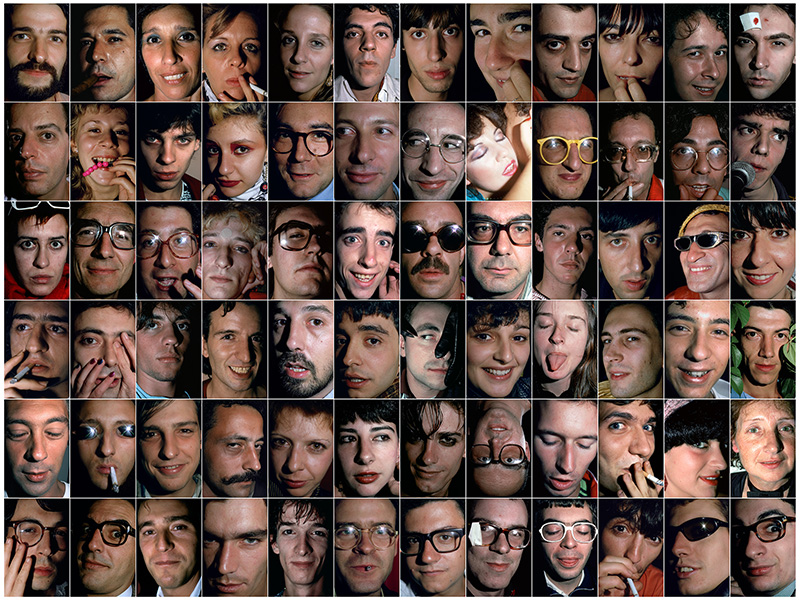
At the beginning of the 80’s Pablo Pérez-Mínguez became active within, and the de-facto chronicler and portraitist, of the social and artistic popular movement that came to be known as “la movida madrileña” (“Madrid’s Move”). P.P.M.’s work—and most of those that posed for him in his studio at Monte Esquinza street—became internationally renowned thanks to the vibrant, eclectic, and spontaneous aesthetics of his unique approach to staging. Pérez-Mínguez’s photographs from this period configured a unique iconography that portrayed a young and open Spain.
The present anthology, curated by Martin Sampedro, includes samples of all the photographic and aesthetic styles of Pérez-Mínguez’s ample iconographic trajectory: Retratos de la movida (Portraits of the Move), Detalles Invisibles (Invisible Details), Mitologías Modernas (Modern Mythologies), Estética Mística (Mystical Aesthetics), and his famous Fototextos (Phototexts). They also constitute a significant illustration of P.P.M.’s frequently avowed FotoActitud (PhotoPosture) throughout his many years of artistic and professional dedication: an impressive trajectory publicly recognized by the award of Spain’s Premio Nacional de Fotografía (National Award in Photography) in 2006.
ICONS P.P.M. reunites the forty photographs for which their author would like to be remembered.
(Text by Martin Sampedro 2010 from his last exhibition «ICONOS PPM» in 2010)
From november 2016 to may de 2017, at Bulevar Salvador Allende. From may to november de 2017, at Bulevar Paseo Valdelasfuentes de Alcobendas.
Pablo Pérez-Mínguez. Mítiko fotógrafo internacional. Pop, kitch, místico, conceptual, underground, hapenning, etc, etc. Pobre Pero Millonario, para los amigos.
…me dijo que, por los avances de la ciencia, su vida duraría hasta los noventa y cuatro años. Y que yo duraría hasta los ciento veinte. En esa convicción estuve, lleno de optimismo, hasta que unos meses más tarde, medio zombi, me cantara la canción Corazón contento de Palito Ortega («Tú eres lo más lindo de mi vida, aunque yo no te lo diga, aunque yo no te lo diga…»), abandonara ésta dimensión y falleciera con tan solo sesenta y seis años.
Poco después de otorgarle el PNF (Premio Nacional de Fotografía) de 2006 acudí a él para que escribiera uno de los textos del catálogo de mi exposición Interior Ulterior. Encontré a Pablo deprimido y decepcionado. El hito de su vida, obtener el reconocimiento más importante que pueda tener un fotógrafo en España, se había convertido en una realidad sin otra perspectiva que el abismo de un pedestal al final del camino. “Muchas flores y poco oro…”, solía decir.
Uno de esos días, al pasar por su casa de Monte Esquinza (El Templo de La Movida), para hablar del textículo que tendría que escribir, sucedió algo que nos uniría incondicionalmente.
Pablo parecía un Gulliver atado de pies y manos…, acelerado y agitado me dijo: “¿¡¡¡¡¡Pero Qué Hago YO con la R@bia…!!!!!?”
A pesar del impacto de ver a mi maestro tan desesperado, tuve la suerte de improvisar una respuesta sencilla: “No lo sé Pablo. Hay gente que vuelca su rabia azotando al sillón con un cinturón… lo que yo hago cada noche es trabajar y trabajar…, hasta que pierdo el conocimiento, recupero la magia y encuentro un tesoro.” En ese momento, con los ojos llenos de lágrimas, completamente iluminado, se vino arriba y muy solemnemente dijo: “…la Fotografía es el amor de mi vida. Ésta nunca me ha fallado. ¡LA FOTOGRAFÍA ME DA VIDA!»”. Un flashback de José Antonio Muñoz imitando a PPM vino a mi mente y, para coronar la escena, repetimos al unísono la milagrosa frase: “¡Guay del Paraguay!”
Inseparables ya con nuevas tareas, cada encuentro era una celebración de la fotografía, el arte, el optimismo y la alegría de vivir. Él me decía que lo hacía por mí, yo le decía que lo hacía por él. Así que el uno por el otro, borrachos de fotografía hasta el amanecer, nos confesábamos la receta magistral de nuestra fórmula mágica para entender y fotografiar la vida, mientras la vida pasaba.
Así comenzó la faena de entrenar a Pablo para el mundo digital y abordar nuevos proyectos como su última exposición ICONOS PPM que hicimos para la Fundación Fiart de Madrid en 2010, y que por iniciativa de José María Díaz Maroto, podréis verla en el Bulevar Salvador Allende de Alcobendas, desde el 14 de noviembre de 2016 hasta mayo de 2017, coincidiendo con el cuarto aniversario de su muerte.
Sesenta y seis años pueden ser suficientes para un humano, pero no bastantes para un robot que aspira a la eternidad. “Todo lo que he hecho en mi vida, lo he hecho para cuando muera.” Así de paradójico era PPM; el hombre fiesta, aparentemente supersociable, era en realidad una de las personas más introvertidas que he conocido. Su mesa favorita de cualquier restaurante era la que le ofreciera las mejores vistas de cara a la pared.
Creo que ese desfase de vivir fuera de su tiempo, y aceptarse diferente, es la expresión más clara de su voluntad de artista creador. Saber que el presente lo sería en el futuro gracias al clic de su cámara, fue su forma lúcida de desafiar al tiempo para transformarlo en foto-actitud, con fecha y apellidos.
El estudiante de ingeniería, que se hizo retratista por devoción a una fotografía de Joan Báez en blanco y negro tomada por Richard Avedon, no tuvo prejuicios en aberrar y emplear estridentes luces de colores para retratar lo extraordinario. Así sucedió con la revista Nueva Lente y las fotografías de Su Movida, que ofrecían una visión de España que, no habiendo existido, proyectaba el futuro de su gente y se ganaba la posteridad. Cada una de sus selectas instantáneas transmutaron el presente en futuro. PPM hacía «Su Vida Misma». Consumía así los instantes y amigos, a quienes elevaba a la categoría suprema, para comprometernos con nuestro destino y talento creador; Dioses o Reinas.
De la A de Alaska, Almodóvar o Alvarado, a la B de Blanca Sánchez, Javier Balaguer o Carlos y Jorge Berlanga, la C de Costus, pasando por la E de Eva Liberten, la F de Fanny Mcnamara, la G de Gil o Gómez Escolar, las Jotas de Julio Juste y Javier Furia, la O de Ouka Leele y Ordovás, la M de Martín y MADRID, la P de Bernard Plossu o Paquet, la R de Rafa Pérez-Mínguez, Jorge Rueda o Javier Ruiz, las Eses de Txomin Salazar, Serrano, Sigfrido, Alejandro Sanz o Sampedro, pasando por la V de Pérez Villalta o Vaquerizo (su hijo mas listo), hasta la Z de PAZ Muro; Pablo Pérez-Mínguez PPM (siempre con preservativo), te inyectaba disimuladamente el par imposible de su genética virtual en el ácido desoxirribonucleico, asegurándose una buena prole de ovejas negras con la que transformar el mundo y dar sentido a quienes deambulamos por el complejo abecedario de sus malditos libros y sopas de letras escritas con rotuladores de colores.
Tal vez su obra y herencia no sean tan conocidas como su ambición demandaba, pero los límites de la fotografía no se pueden predecir como tampoco es calculable la distancia que recorrerá la luz de la mirada de un espejo mirando a otro espejo. Los sueños de PPM no fueron muy diferentes de los de László Moholy-Nagy, Walter Benjamin, Richard Avedon, Man Ray o Sampedro. Es lo que tiene jugar con espejos. La eternidad estaba ya escrita en su propia naturaleza. Descanse en Paz o despierte, Mister PPM; «EL TIEMPO ES ARTE ©» (…continuará)
MARTÍN SAMPEDRO. Madrid, 11/11/2016