© M A R T I N S A M P E D R O
logo

Tag : Mondo Galeria


retrato01b
Portrait: Giedrius Petrauskas, at POST Gallery. Kaunas


“Perhaps the gesture trigger the shutter of a camera is a conscious decision to catch something memorable and embalmed for preservation as something true. Instead the truth is latent, and the creation it is invention.”


In October 2015 Latent exhibition was presented at the gallery Mondo in Madrid. A few months later, the expanded collection with the video installation “The Rape of Europa” and some other photographs from the book, has been exhibited in the POST gallery at Kaunas, Lithuania. It is the beginning of a roaming I trust expands the horizons of sampedrismo and the New Photography.

-But why so far, my son? (Said my mother).

She’s right thinking that it will cost effort to lead exhibition so far, but the satisfaction of seeing the collection well exposed on the eyes of hundreds of people absorbed, reinterpreting images with his smart phones, it is the best tribute we can do to the Latent world. So keep working to trip the collection to more destinations to show internationally.

Giving birth image is an effort of self-acceptance. The image is revealed and tells you something, maybe of the future if you know understand. When you don’t know, just let time to recognize the signs. At least in my case, photography has been the vehicle that intuition leads me to know new worlds, new lights and new ways to build my own existence. The Photography gives me Life.

Share your own view, do physical the virtual, materialize, monetizing, frame, glass, packaging, teleportation, expectation, reconsider… The process of displaying images hanging of a wall is an experience that challenges time. ¿Will last the image so many years as the wall? There are images that pull down walls and walls that devour any image. What are the criteria for determining right or wrong? Why or why not, is something that we undertand faster, at first sight, but obviously it is, we’d know not to say the because of. That exercise of showing pictures hanging on the wall, makes the image as solid as the wall that sustains it. So as the years pass, when a photograph is iconic, don’t want to leave his anchors.

From cultural insecurity, their ministries, the walls of virtuality and social networks where we live, to the walls of the real world, castles, museums, graveyards, borders, deceased, where we dream in life without gravity secured by the Nails of Christ and the screws of the sacred photographs . The Photography gives me Life but also gives me grave.

Martin Sampedro,  28/08/2016


Press Articles:
https://anti-utopias.com/art/martin-sampedro-latente/

http://www.quesabesde.com/noticias/martin-sampedro-entrevista

http://kauno.diena.lt/naujienos/kaunas/


Radio Nacional de España. Salimos por el mundo – Martín Sampedro.

Latente Book: LATENTE “En el sueño de seres invisibles” Textos de Martín Sampedro, Leandro Taub y Antón Fernández de Rota. Encuadernación tapa dura 31 x 31 cm. 200 páginas. Edición limitada, firmada por el autor.


Thank you very much to Andrius Pukis (Director of POST Gallery), Diego Alonso (Director of Mondo Gallery ), Jarek Ros (Coordinator), Girl Yhared (Performer) and all the friends and fans who have made posible this great trip. Photographs by Lina Pranaityte and Martin Sampedro.


Sorry, this entry is only available in European Spanish.

«The Rape of Europe»

Raptar a una mujer es fácil por muy continental que sea su nombre. Lo mismo sucede con los conceptos, las ideas, las imágenes, la patentes, los sistemas, todo puede ser raptado secuestrado, conquistado, manipulado, fusilado, plagiado, envasado, vendido y devaluado, cuando se vive en la avaricia y se dispone de un batallón de mediocres paniaguados que simulen la tempestad perfecta.

Esta fotografía «El Rapto de Europa» que forma parte de la colección Latente, es una puesta en escena con la que recreo el mito griego en el que Zeus se convierte en toro para «salvar» a Europa, llevándola al huerto en sus lomos.

Al igual que Hans Bellmer fue capaz de construir una iconografía estrambótica para preservarse de la dominación Nazi, mi excéntrica Nueva Fotografía, se construye con otras luces, para librarme de los raptos, secuestros, y huertos en los que vivimos adormecidos. Llámese Europa, Ciencia, Patria, Fotografía, Economía, o Energía, la evolución depende de nuestra capacidad de inventar  o intuir nuevas luces y palabras.

Esta crisis de los refugiados, la mayor crisis humanitaria desde la segunda guerra mundial, se adentró en Latente antes de que sucediera. La intuición es latente, lo dice Stephen Hawking “las máquinas no traerán un apocalipsis, pero la avaricia humana lo hará”. Martín Sampedro


«Cuando cuente hasta diez estarás en Europa»

Antón Fernández de Rota. A Coruña, octubre de 2015. (Extracto del libro “LATENTE” de Martín Sampedro)


Es de noche y un tren avanza. El tren no se ve. Solo las vías. Unos metros de vía iluminados; el resto es oscuridad. Los raíles pasan rápidos y monótonos, como el parpadeo mecánico que acaricia la pupila perdida en el orificio profundo del lobotomizado. Una voz en off se dirige a ti, cálida, pausada y grave: “Cuando cuente hasta diez estarás en Europa”.


Uno…

Europa no se ve tan fácilmente. Requiere preparación. Hay que aclimatar la vista y el oído, en la cadencia propia de lo onírico. Ευρώπη. Mitología. Rapto. Una mujer fenicia seducida por Zeus, engalanado para la ocasión vistiendo el cuerpo de un toro. Enamorada, Zeus se la llevó consigo a Grecia montada a su lomo, como en el cuadro de Moreau, donde el cuadrúpedo conserva un rostro humano para mirarla, con dulzura comprensiva, a los ojos. O tal vez Ευρώπη, la mujer engañada por aquel dios —“ignorante de a quién montaba”, según Ovidio—. Peor: Europa, mujer, fenicia, hija del rey, monarca en la œumene otra por antonomasia, mujer y asiática, secuestrada y apropiada. Esta es la versión de Herodoto. La imagen elegida por Tiziano. Pintada toque a toque, al son de los golpes que manchan el lienzo con los colorantes disueltos en el aceite, con un fondo de brochazo largo, cuya tensión de conjunto, caótica, tan solo el concierto cromático logra recomponer. Y el tren avanza.


Dostres…

Cuatro versiones de Europa, corriendo un velo sobre la mujer. Nos dicen que Europa es porque no es lo que fue. No hay rapto, menos aun mitología. Europa es una Civilización. Europa es un hecho histórico, un dato de positiva materialidad que existe por sí misma y no tiene necesidad de ir a buscarse fuera-de-sí. Contención. El coro de voces sigue acoplándose en canon. Grecia, o la Europa política y filosófica. Roma, o la Europa política y legal. La cruz de Europa, una cultura anclada al territorio signado por el chorreo de la sangre sacrificial. Y algo más, que por prudencia no se habitúa a decir en voz alta; un caudal de murmullos la definen en su susurro como una variación tonal: Europa, un color, blanca y no negra.

Imposible aceptar desde esta óptica el oscurecimiento propuesto por el historiador Martin Bernal, que sostenía lo siguiente. Durante siglos, incluidos los que comprenden sus periodos heroico-mitológico y filosófico-democrático, Grecia, más allá de sus conflictos orientales, fue imaginada como parte de una misma, basta y difusa área cultural egipcia y semita; solo a partir del XVIII pudo blanquearse la polis e imponerse la visión aria.

Nuevo rapto de Europa. Rapto ahora de su cuna, separada de sus dos hermanas, Asia y África.


Cuatro…

La última vez que Europa fue mujer, políticamente, lo fue sobre el mapa, antes de que al cuerpo del continente le naciese un Norte noble y un Sur grosero. El cartógrafo Sebastian Munster la representaba de pie. Europa Regina. En Iberia queda su cabeza coronada. Italia es el brazo que sostiene por Sicilia el orbe con la cruz. La otra extremidad escandinava, agarra con sus gélidas costas el cetro. La Galia es su pecho. Germania, su corazón. Sus faldas caen por Hungría y Polonia hasta tocar el suelo en Grecia y Moscú. Pero entonces se disipa, abrupta, la ensoñación de los Habsburgo. Europa es cisma. Un hachazo que la abate.

En lo sucesivo permanecerá por siempre en posición horizontal. Tumbada y desmembrada. Así lo sanciona Westfalia. Por más que el sueño cesáreo de la recomposición imperial siempre esté ahí, latente, y que de sus quimeras nazcan todos los bonapartes y los hítleres, y los señores de la Santa Alianza que ahora mueven los hilos de la Comisión Europea y el Banco Central; y la latencia de la latencia, que redescubre razas urálicas y helenas, ante la desesperación de los refugiados que escapan de sus tierras arrebatadas por las guerras gringas y europeas, arribando, desde Siria, a las tierras donde el Jobbik enarbola el estandarte y espumea, frente al antiguo sol y león persa, el Amanecer Dorado.


Cinco… seis…

La máquina que se confunde con Europa se abre paso pesada. Como el tren en la Europa de Lars von Trier, en el tramo final de una trilogía organizada en torno al elemento del crimen que es la latencia de todos los raptos de Europa. El tren soporta la carga de las sanguijuelas y las serpientes que se arrastran y se enroscan en sus asientos, amenazando al Juggernaut metálico con hacerlo descarrilar.

Europa viajó a paso de conquistador antes de recorrer los caminos de hierro. Bodas, primero, del Cielo y de la Tierra, en la imaginación de Colón, quien a orillas del Orinoco creyó haber descubierto el septentrional Paraíso perdido de Eva y Adán. Y un rápido intento de divorcio, exigido por Sepúlveda al dudar de la humanidad de los salvajes, ante el enfado del obispo de Chiapas. Las diatribas de Sepúlveda y De las Casas giraban en torno a esta cuestión: ¿hay un alma ahí, en ese cuerpo desnudo que habitan los salvajes? Pero ahora los europeos ya no se hacen este tipo de preguntas.

Una migración conceptuallas llevará desde una escisión de la humanidad de corte espiritual a otra material. La primera, religiosa, distinguiendo entre quienes están cerca o lejos del cielo por su constitución corporal. La segunda, geográfica, durante la Ilustración.

A la altura de Montesquieu los continentes se rompen en la verticalidad de la línea que va del Norte hasta el Sur. Gracias, paradójicamente, a la ayuda de quienes quedarán subordinados en esta nueva cartografía y climatología política. ¿Acaso no fueron los naturistas americanos, criollos e hispanos, quienes primero ofrecieron la taxonomía, aunque fuese para legitimarse ellos mismos?

La ciencia criolla dice: el temperamento colérico de los hispanos, en el propicio clima americano, se compensa con la humedad de las indias, surgiendo de lo flemático y de lo colérico una constitución sanguínea superior. Y Montesquieu replica un siglo después: observen los frutos cultivados en los climas germánicos; la racionalidad de sus leyes surge del clima que enfría las pasiones; la vieja ley germana, calculadora, exacta y diáfana: “el hombre que destape la cabeza de una mujer habrá de pagar seis sueldos, quien descubre la pierna hasta la rodilla también, y el doble si levanta el vestido por encima de esta articulación.”Observen ahora que ocurre en España: el calor nubla la razón, concluye Montesquieu. El sexo extiende su imperio. El Sur se entrega a la venganza en una espiral de violencia con su punto de origen en el adulterio, que inflama igualmente la imaginación de sus legisladores, recelosos de un pueblo pasional, tan vago y corrupto como ellos mismos lo son.

De esta climatología imaginada nace la primera figuración de aquellos dejados al Sur, y que hoy el Norte, siempre necesitado playas cálidas, prefiere llamar cerdos, haciendo chistes con el acrónimo “P.I.G.S”.

Si se quiere, se podrá representar así otra trilogía europea. Uno, dos, tres. El primer episodio lo protagonizan los conquistadores, el segundo los lumières, y el tercero… El tercer acto no ha terminado aún. El tren.


Siete…

Europa bífida, como la lengua de una serpiente. Europa del Norte y Europa del Sur. El pensamiento-víbora se duplica otra vez esparciendo su veneno al otro lado del océano. América del Norte y del Sur. Bipartición cargada con todo el simbolismo que arrastran los siglos y los milenios. Norte y Sur. El cuerpo ligado a la tierra y el que se alza hacia los cielos. La parte inferior del cuerpo: la barriga, las vísceras, el ano, los genitales. Las peligrosas fuentes de la pasión, que emponzoñan la razón cerebral. El vientre y el bajo vientre, la parte animal donde imperan y acucian las necesidades que ponen en peligro la corona de la mirada humana, allí donde el alma brilla con dios, enturbiando la pupila, difuminando así la distinción que separa lo humano de lo animal.

Las fiestas de los bobos y la risa pascual, la fiesta del asno y el carnaval, medievales y renacentistas. La inversión de lo cotidiano. La perversión de lo alto y lo bajo. La apertura del cuerpo en el realismo grotesco. El labrador que engulle al papa en la parodia, para ponerse en su santa piel. La vaca que duerme en los aposentos reservados a los amos. La mujer que abandona los ropajes que le son asignados. Quien se disfraza de animal, para comportarse por un día como tal. Corporalidades constructivistas. Grotescas, porque para entrar en comunión con el inferior absoluto, y subvertir las diferencias de naturaleza y de rango, necesitan deshacerse de la integridad. Mijaíl Bajtín: “el énfasis está puesto en las partes del cuerpo en que éste se abre al mundo exterior o penetra en él a través de sus orificios, protuberancias, ramificaciones y excrecencias tales como la boca abierta, los órganos genitales, los senos, los falos, las barrigas, la nariz”. Roto el cuerpo, adquiere profundidad.

Lo contrario de la pornografía, que jamás es grotesca u obscena. Que no es profunda sino plana, incluso cuando bucea en las jugosas cavernas del cuerpo.

Demasiado higiénica, la pornografía resulta en exceso científica para resultar grotesca… o erótica. Boris Vian: “el erotismo requiere una obscenidad ligeramente sublimada, una obscenidad poética”. Que es lo contrario de la exposición industrial del corte en serie de la carne a lo largo de los planos pornográficos; o científica, a la manera de la toma ginecológica del coño abierto o de la sonda en la que se convierte el pene lubricado bajo los focos que lo filman durante la penetración bucal, anal o vaginal. Carnicería fotográfica de la anatomía científica, una verga, unos pechos, el agujero del culo, mostrados por separado, pieza a pieza, en un plató tan densamente iluminado como el quirófano. El erotismo se baña en las aguas del misterio, necesita algo de oscuridad e indecibilidad, para mostrar atmosféricamente lo que no se ve. El porno, como la vieja ley germánica, lo expone todo y lo muestra parte por parte, iluminando las zonas con una misma luz. Tiene el encanto y la misma efectividad que la estantería de productos en un supermercado. Fácil, rápido, apetecible, despersonalizado, inventariado y categorizado, adecuado a las exigencias faltas de tiempo del just in time.

La Europa que viaja en el tren, por la tercera entrega de la trilogía, es pornográfica. El campo de concentración nazi lo fue, todo él, y no solo las Divisiones del Gozo, hechas de mujeres judías recrutadas a la fuerza para ser violadas por los oficiales. Facebook, Twitter y Tinder también lo son, pero de un modo interesante. Todos mentimos, y lo sabemos. Plena exposición de cada uno de nuestros instantes otrora íntimos, pero falseados. Y de ahí su atractivo, que ofrece a la pornografía del selfie regulada por la ciencia del logaritmo una pizca de misterio erótico y de jugueteo cínico. El tren que avanza, transita alocado ahora los viales de las redes sociales. Pero las segregaciones de la serpiente son susceptibles de volverse aquí pharmakon. Platón: el veneno que es remedio a la vez.


Ocho…

Una nueva representación del rapto: Latente, la obra de Sampedro. Los cuerpos del porno son demasiado reales para ser perfectos. Los que crea el fotógrafo, demasiado perfectos para ser reales. La latencia, en el mejor de los casos, es lo único que aquí es real. Versiones de Man Ray, envueltas en flujos digitales para desvelar el sonido oculto de su sensualidad. Escher erotizado. Y las muñecas de Bellmer… Aquí la clave.

Bellmer las armaba para vengarse de su padre nazi. La muñeca de múltiples pechos. La muñeca que toda ella es partes. Partes que pueden ser ensambladas una y otra vez, para descubrir la mecánica del deseo.

Bellmer seguía los pasos de Kleist, cuyo relato sobre el teatro de las marionetas había ilustrado. El mundo orgánico, escribía aquél, se está debilitando, pero el bailarín podrá aprender de estos extraños muñecos para renovar su arte. No hace falta individuar las partes de cuerpo atándolas al titiritero con una miríada de hilos. Cada movimiento las gobierna desde su propio centro de gravedad, en el interior de la figura, dibujando curvas maravillosas, ofreciéndole al humano posibilidades corporales insospechadas. Tal vez por esta imagen el Kafka de la Metamorfosis admiraba a Kleist. Quizás hubiese que alinear la poupée Bellner y las imágenes de Sampedro con otras marionetas más: las bunraku del teatro japonés, interpretadas por Barthes en El imperio de los signos, con su espectáculo de cuerpos desagregados.

¿Qué son todas ellas? El problema del pharmakon. Las imágenes de Sampedro asumen la forma del Cubo en la película de Vincenzo Natali, para invertir su funcionamiento; un cubo que bien puede ser tomado, como sugería Peter Flemming, crítico del management, como metáfora del mundo laboral actual.

Nunca se entra ni se sale de sus entrañas. Todo ha empezado antes de comenzar, y jamás acaba nada. Ni siquiera termina cuando la puerta de la oficina se abre y la traspasas y das el primer paso en el interior de tu casa. Un cubo da a otro cubo, dentro del mismo rompecabezas. Llamada del jefe al anochecer, cuando combates contra el sueño entre los cojines del sillón. Revisión del e-mail del trabajo mientras desayunas. Ni siquiera al dejar el empleo abandonas el cubo de cubos, pues ya estás atrapado en el continuo acto de invertir en tu capital humano para seguir adentrándote en aquello de lo cual nunca has salido. Cada habitáculo tiene una salida, sí, pero va a dar a otro más. Y estas habitaciones se mueven periódicamente, gobernadas por un logaritmo indescifrable, cambiando su posición para evitar que recuerdes el camino por el que has avanzado, si es que un día quieres recorrerlo hacia atrás.

Frente al Cubo de Natali, estas otras imágenes: “Psiquis y Cupido”, “Homos”, “La chica Golem de Bellmer”, “Andrógino amamantando dos medias naranjas”, “La muñeca de Hans”. Armadas con la audacia de Bellmer, Sampedro convierte el cuerpo en el exacto opuesto de aquella sádica colmena mecánica. La articulabilidad de las piezas es índice de libertad, en tanto que liberación de posibilidades. Y ello, gracias a un flirteo descarado con lo pornográfico, que prefiere abrazar su código para someterlo, antes que retroceder asustado ante la omnipresencia pornográfica; abrazarlo, antes que entregarse a la imposible tarea profiláctica de su condena, o a la inútil declamación del exorcismo, como la del impotente beato que se pertrecha tras un crucifijo, sin poder apartar su mirada deseante del catre donde se convulsiona la poseída.

Es mejor jugar en el dominio de lo pornográfico. Aceptar sus términos y desviarlos para llevarlos a otro lugar. Convertir la sobreexposición en latencia, reenviando el cuerpo desde los ámbitos de la ciencia y del supermercado de regreso al mundo de los sueños. La fragmentación, por el exceso numérico de partes y por el mezclado de cuerpos y órganos, termina por infectar la carnicería anatómica y el higienismo pornográfico con un realismo grotesco extraído del fantasioso reino del carnaval. Doble movimiento. De lo real a lo onírico y de lo onírico a lo real.


Nueve…

“La llave del paraíso/Swastica”, así se llama la imagen de Sampedro en la que dos cuerpos femeninos semidesnudos y unidos por sus nalgas, forman con sus piernas el símbolo indio del que se habían apropiado aquellos viejos nazis que llenaban el ferrocarril de Lars von Trier. El tren de la Europa raptada. El tren de las sanguijuelas sedientas de sangre y de todas las serpientes bífidas empeñadas en partir la tierra en dos, a imagen de sus lenguas venenosas, que han querido colocar un Norte siempre por encima de un Sur, incluso en el teatro pornográfico, alérgico a la obscenidad.

Ευρώπη, mujer, raptada, apropiada por el impulso sexual de un dios. Al fin, rapto pornográfico, dios raptor raptado, por una exuberancia de ciencia y de mercado. Ya se escucha el tic tac que preside la estación. Llegamos a la parada final. Y nos topamos en el andén con los mil cuerpos de lo grotesco, que asedian, como el viejo fantasma del aquél manifiesto, las fantasías y pesadillas de una Europa a la que estás a punto de entrar, y de la que nunca hemos salido, y que se tambalea mientras sus ruedas hacen a las vías chirriar.

Antón Fernández de Rota. A Coruña, octubre de 2015

Descargar el Libro “Latente


[sgmb id=”1″ customimageurl=”https://www.martinsampedro.com/wp-content/uploads/2016/06/miniatura-rapto-de-europa.jpg” ]

Public Issue Blue Blood


“…sólo artistas raros y ajenos a la institución y el sistema, ajenos a las servidumbres como Sampedro, pueden ofrecer las lecturas correctas que necesitamos los ciudadanos que aspiramos, hoy en día, a seguir siendo libres. Aunque sea a través de un recurso aparentemente tan simple como el de decirnos que “el Rey está desnudo”. O mejor dicho, la Monarquía entera. Porque en los últimos capítulos de su extensa y variada obra, el amigo anda empeñado en mostrar una y otra vez las vergüenzas de nuestra Familia Real, y, por extensión, las de todos sus súbditos.” David Casas Peralta.


martin sampedro platos 01
Martin Sampedro. Galería Mondo. 2016


Adam & Eve Loop Portrait

Adam & Eve Loop Portrait

Installation, “Te Strangeness of Being”. Variable size media. Audio and video loop for two independent monitors or projectors. One for Adam and another for Eve. Martin Sampedro. 2010.


“Los contrabandistas de Ronda”. Federico García Lorca and Salvador Dalí in love. Martin Sampedro, 2009


Latent Alter-Portraits

Latent Alter-Portraits

I will put my Spirit in you and you will live. I will attach tendons to you and make flesh come upon you and cover you with skin; I will put breath in you, and you will come to life. 
The Valley of Dry Bones.Ezekiel 37


When my friend P. P. M. wrote the headline for the catalogue of the exhibition Interior Ulterior: «Martín Sampedro: The New Photography», I was surprised by his ability to explain my work as a pioneer of anew event. The New Photography, in which I work, is not made of the daily moments which Pablo used to call “my own life”, but incorporates other lights, other life forms, hallucinations or virtual beings, as essential elements of the photography. Naming my work this way, he acquitted the taboo of the dangerousfriendship between traditional photography and the new forms of creating images in the digital era. That’s where the inverted “N” comes from: in memoryofthe magazine “Иueva Lente”, of Pablo Pérez Mínguez, Carlos Serrano and Jorge Rueda. Their recognition and example are within me when I create images and look for a way to name them; new photography, fantastic photography, magical realism or grotesque beings, in memory of my neighbour Valle-Inclán.

Could I live life without thinking about it, observing it, photographing it, naming it?

Since I can remember, spending time taking pictures has helped me to revealintuitions. As much as words can dress up an idea, photographyhelps me undress the reality. What I think is condemned to be forgotten. As I write, I forget, but images are what stay latent in my memory.  When I think of a concept, for example love, inevitably it brings to me the image of people I love.Memories, concepts and feelings have the appearance of a photograph, even without the intervention of a camera, or withoutpressing the camera shutter to catch the instant. What we think we do consciously, is made by our mind unconsciously, naturally, without any camera, developing or retouches. The subjective camera is always turned on, working in raw to show us something that is not merelyretinal; from which springsmy impure vocation to cook images, to push subjectivity to the limit.

But what happens with blind people? Don’t they cook images too?

I close my eyes to ponder this question and I see some coloured spots, energies and forms that I can’t reach… I feel my eyes blinking like a film reel, almost electric, maybe it’s the echo of the fluids beating inside of me. My jaw relaxes and starts shivering, it vibrates, jingles as if I was nervous… That’s not what I expected! I forgot to bleed the radiators and maybe the cold is shedding light on this mystery. In every grind of my teeth, flashes of holographic images pop up, weaving memories and wishes…,my eyes inundated by the emotion.

With my eyes closed, I have seen portraits and fragments of reality that take me back to my childhood, nothing strange but vertiginous. Wow! When I dress in the skin of a blind person, I hallucinate and cry as hewould do if his sight had been restored.

Is photography anything but hallucination?

After Interior Ulterior, La extrañeza de Existirand Sangre Azul, in which the human figure had been replaced by virtual beings, with the excuse of showing the different dimensions of existence, I find myself doubting whether to continue on this path. When closing my eyes to visualise the dimension of the disaster, I discover how abysmal it is to walk alone, and how lucky I am to have so many invisible friends. Those grotesque beingsthat guide me and make my work so recognisable are giving me the chance to create myown imagery.

Unwittingly they seem to provoke a conflict between the human world and traditional photography, which I would never reject, as it has been with me since childhood, saving me an infinite amount of empty words. “Latent” was that magical sensation that enlightened my imagination as opposedto the reality caught in the film rolls that hung from the shower. “Latent” is the rush to sense the miracle of life, the vital energy. “Latent” is the light that I reclaim, the light from your gaze; “You’ve come, Telemachus, you sweet light”..This sweet light Homer named in Greek as (phaos/phaeo), instead of the sunlight(phos/photos), which gavephoto-graphyits name. That was the light that lit the latent, and that’s why at some point I called my photographs: “phao-graphs”.

Thepassion humans have to imitate what occurs in nature has always caught my attention. A freshener that smells of pine, a painting that looks like a landscape, a photographthat looks like a painting, adrawing so well done that is almost real … Everything around us inspires us to deconstruct and manufacture as if we were creators. The economy, the development, the welfare, the discomfort, everything humans do revolves around the possibility to ownthat which in nature is given for free.

But we accompanyit with a white lie, a price, sometimes a death trap. We also elaborate creations and trompe l’oeilwith which we show the latent dimension of that we admire. So art, in this digital age, is visited, revisited, copied, duplicated, imitated, fondled, improved, valued, devalued, sent, stolen and given away, with the urge to postpone rather than to propose. Perhaps by triggering the shutter of a photographic camera we consciously decide to catch something memorable and preserve it as something true. However, the truth is latent, and the creation isan invention.

Will there be a new art, beyond entertainmentorshow?

I’d like this last experiment, Latente, to say something in favour of the New Photography and itsspiritual light. At last we can photograph the nonexistent,we can raise the eyesbeyond the obvious and build a reality without fear of collapse. When looking at the Latent collection of photos, after the contemplation, theonanism or aesthetic delight, I feel that to breathe, to move,to photograph and to share places or nonexistent people, respond to my necessity to meetmy Alter-ego. And to make myself understood, I have coined a new word loaded with future that describes what I do now: “Alter-portraits”.

Since Louis Dodero invented the famous calling cards with which photography became popular in the early days, the camera has seen constant innovations that have transformed the way we see and understand life. The digital revolution has only just begun. The massive development of this technology has enabled anyone to express themselves and create portraits in the easiest possible way. Soon digital cameras will be equipped with new spatial and sensory technologies that capture, represent and share what you see when you close your eyes.

So loosen your eyelids and let rise the latent. I offer this collection of alter-portraits as a homage to photography and the photographers, those of the negative, the positive, the microscope, the endoscope, the scanner, the 3D and the MRI; those of the latent hallucination, thosewho invented modern art and those who revolutionized the medicine and science based on new ways of looking at life and its different dimensionsand to the strength of their imagination.

Make this images yours, rebel, discover the magical feeling of revealing the latent, create new riddles and perhaps they can inspire and raise the dead.

Martín Sampedro,  14 de abril de 2015

000 BOCETO LIBRO 001 baja


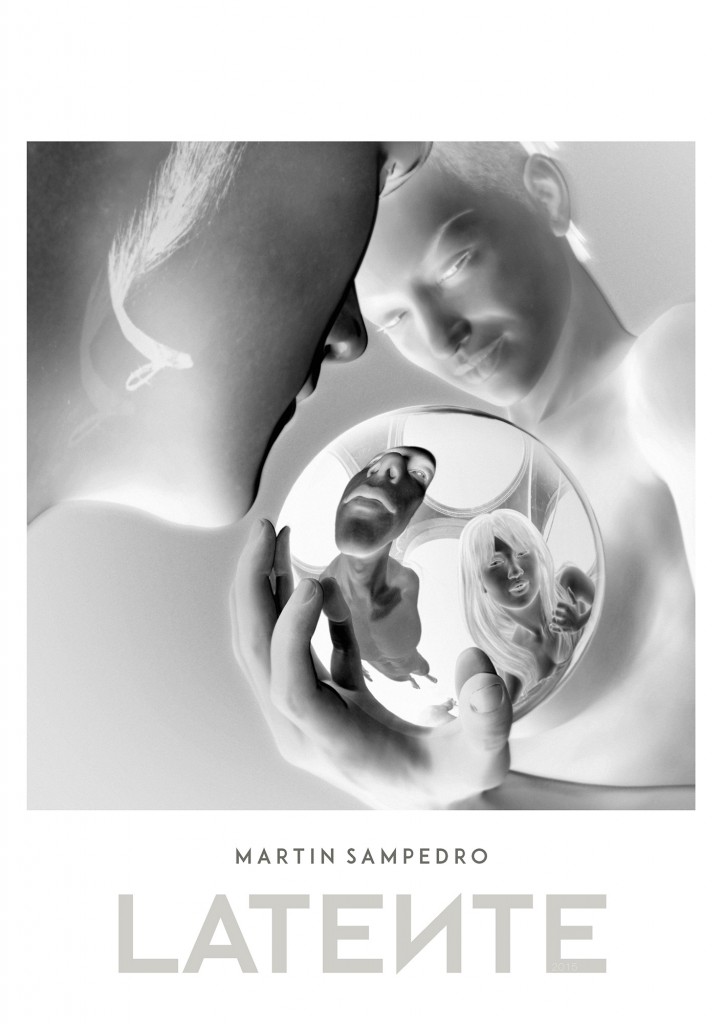
The “LATENTE” collection is shown in negative so that the viewer develops the photographic process. Through the camera of your mobile phone, you can see positive images. Use the camera by default from your smart phone, with the negative effect, or install a free application for iPhone.


 [sgmb id=”1″ customimageurl=”https://www.martinsampedro.com/wp-content/uploads/2015/10/miniatura-latente-alterretratos.jpg” ]

Latente is a post-photographic project inviting viewers to discover the latency of images comprised within the series of Alter-portraits.

Sampedro’s “New Photography” incorporates latent lights and life forms, hallucinations and virtual beings, to question the nature of photography today in its relation to new forms of creating images in the digital era. Inspired by Valle-Inclán, whose portrayal of figures from Spain’s political history often appealed to obscenities, ruthlessness and vulgar imagery as a means to mock the theatrical insipidity, Sampedro’s images of desire and sexuality are politically subversive and challenge the nature of photography. It would be hard to give a definition to what “New Photography” means since this is mostly a personal relationship with the photograph itself. Whether new photography, fantastic photography or magical realism, Sampedro’s work is based on a complex imagery and drastic perspectives on life that encourages an intuitive approach. “As much as words can dress up an idea,” says the artist, “photography helps me undress the reality.”

The idea of latency is thus a means to address and access the memorial qualities of an image rather than an elaborate structure of concepts that would have to do with an explicit thinking about images. “Memories, concepts and feelings have the appearance of a photography, even without the intervention of a camera or without pressing the camera shutter to catch the instant. What we think we do consciously, is made by our mind unconsciously, naturally, without any camera, developing or retouches. The subjective camera is always turned on, working in raw to show us something that is not merely retinal,” says the artist.

Sampedro’s manifest desire to push subjectivity to the limit allows him to create intuitive scenarios around the desire behind the image. These are not ‘negatives’ of the real; they reflect a different light altogether. In this sense, they are not portraits but rather the Alter-portraits of an alternate reality we are invited to discover beyond the naked visuality. While photography is a process of finding new means to reflect light across the opacity of matter, Sampedro’s images are meant to go through matter and desire, beyond what the camera records. Seeing through and into ourselves, the artist’s work is not radiographic either; it is a mental state that creates tension between our perception of the image and the reality we imagine around the given image. Sampedro’s latent photographs address the obscure nature of the psyche and disclose an illuminating process that is both technical and mental. It should come as no surprise then, that the artist’s insists on sexual imagery to seduce the viewer into his work. This has more to do with the energies and forms one cannot reach but longs for; the flickering and pulsating images in his video are a vibrating reel of imagination rather than reality. These “flashes of holographic images pop up” and weave memories and wishes together. They are visual vertigines rather than images as such.

Is photography anything but hallucination? (Martin Sampedro)


In envisioning the virtual being, the artist breaks away from the constraints of figuration, allowing the virtual camera to travel inside the body and across the fleshy planes as a means to explore the different dimensions of existence. The idea of latency is as much about the vital energy of matter, as it is about the germinal nature of the image itself. This, as Sampedro explains, might have to do with a distinction between phos/photos, the sunlight which gave photography its name, and phaos/phaeo, the sweet light in Homer’s envisioning of Telemachus. “That was the light that lit the latent,” says the artist, “and that’s why at some point I called my photographs: phao-graphs.” It is not a visual field that Sampedro seeks to reveal, but rather the consistency of matter as a matter of unconscious illumination. In a world that inspires us to deconstruct and manufacture, arising demiurgical pretensions over nature and the real, the artist’s gesture is meant to reclaim a certain spirituality. In this digital age, says Sampedro, “art is visited, revisited, copied, duplicated, imitated, fondled, improved, valued, devalued, sent, stolen and given away, with the urge to postpone rather than to propose. Perhaps by triggering the shutter of a photographic camera we consciously decide to catch something memorable and preserve it as something true. However, the truth is latent and the creation is an invention. I’d like this latest experiment, Latente, to say something in favour of the New Photography and its spiritual light. At last we can photograph the nonexistent, we can raise the eyes beyond the obvious and build a reality without fear of collapse.”

As we are ever closer to a moment when sensory technologies will allow us to capture, represent and share what we see when we close our eyes, Latency can be seen as a double artistic gesture: on the one hand, the artist invites to a dialogue between the possibilities offered by post-photographic media and the negative, the positive, the microscopic, the endoscopic, the scanner, the 3D and the MRI. These, as we know, have been instrumental in grounding modern art and inspiring the development of medicine and science. On the other hand, Sampedro’s Alter-Portraits confront the viewer not with an image of the other, but with an image of ourselves: our Alter-egos, our hidden desires, our intimacies, our thoughts and cravings, our very own eagerness. The latency of the image is, in fact, an appetency for our own selves. One can fall into the abysmal psyche of self-imagining and self-representations, a looping echology where one only apprehends himself and therefore nothing – or find new ways of looking at reality and the other, ways that are illuminated from the inside.

Sabin Bors, October 12, 2015